

If you have run Meta Ads before, you probably know the feeling. You set a budget, launch a campaign, and a week later you are looking at the report wondering where the money went. There are clicks. Maybe some likes or comments. But not enough leads or sales to justify the spend.
This happens more often than it should, and it usually is not because Meta Ads do not work. More often, the problem is how the campaigns are being managed.
There are four mistakes that show up again and again: the wrong audience, not testing enough creatives, unreliable conversion tracking, and campaign objectives that do not match the actual business goal.
Fixing these does not necessarily mean spending more. It means making the existing budget work more efficiently.
Reason 1: The Audience Is Too Broad or Just Wrong
This is one of the most common problems, and it is easy to miss because the campaign can still look healthy from the outside. Impressions increase, reach increases, and the budget gets spent. But if the people seeing the ads are not likely to become customers, those numbers do not mean much.
Many Meta advertising services start with broad interest-based targeting because it is quick to set up. Pick a few relevant interests, choose an age range, launch the campaign, and wait for results.
The problem is that an interest does not always indicate buying intent. Someone who follows fitness pages, for example, may have an interest in fitness without having any intention of buying a fitness product right now.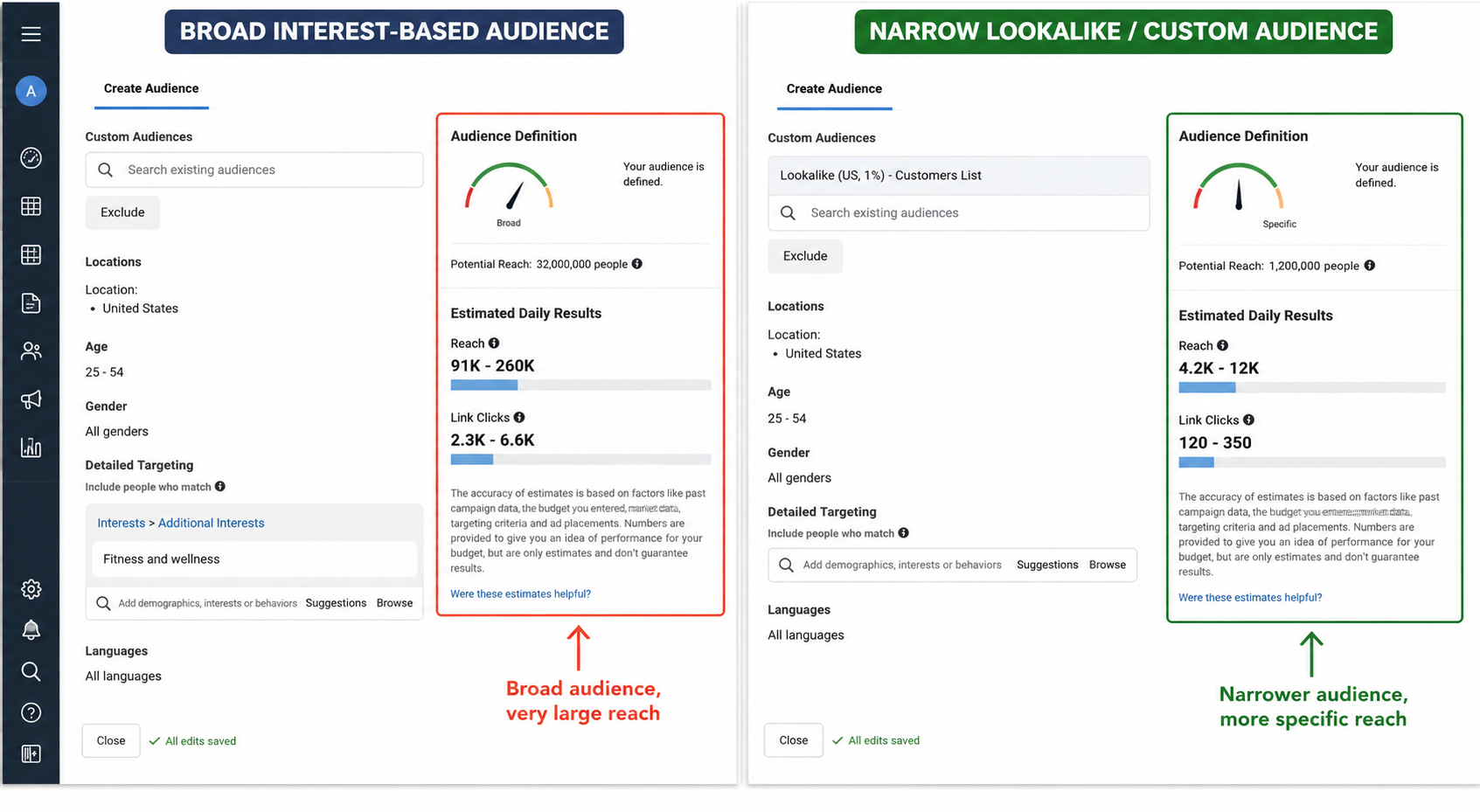
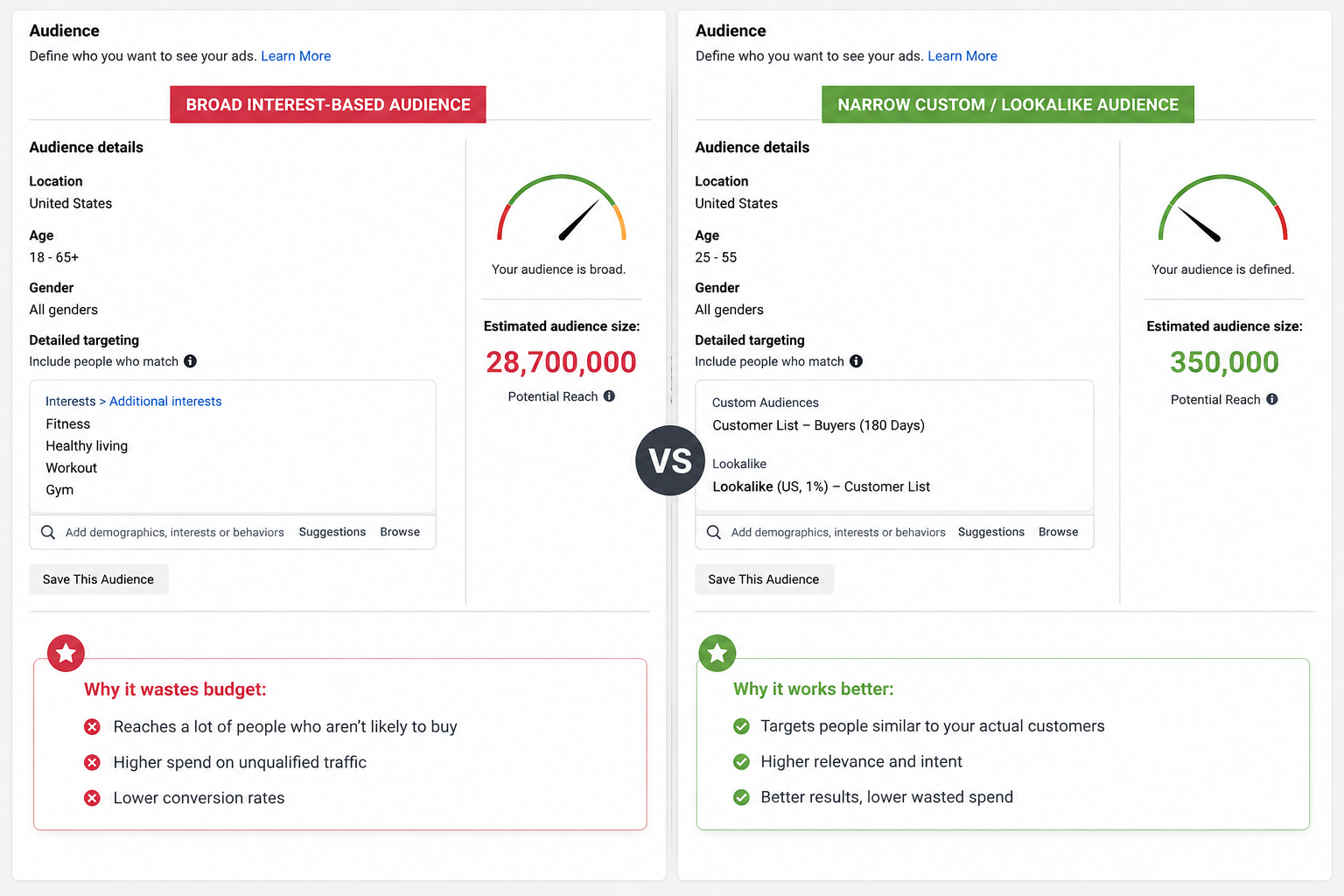
The answer is not always to make the audience smaller. In some accounts, broad targeting can work better when Meta has enough conversion data to identify the people most likely to take action. In other cases, a lookalike audience based on existing customers may be more useful than relying on interest categories.
The important part is knowing why a particular audience was chosen.
Instead of asking, "How large is this audience?" ask, "Why are these people likely to become customers?"
That shift makes targeting decisions much more meaningful.
Reason 2: One Ad Runs for Weeks With No Testing
This happens constantly. A business launches one ad with one image, one headline, and one piece of copy, then lets it run for weeks without testing alternatives.
Maybe it performs reasonably well. Maybe it performs badly. Either way, there is no way to know whether something better was available because nothing was tested against it.
Creative testing is one of the most important parts of managing Meta campaigns. Different hooks, visuals, headlines, formats, and opening messages can produce very different results, even when they are promoting the same offer.
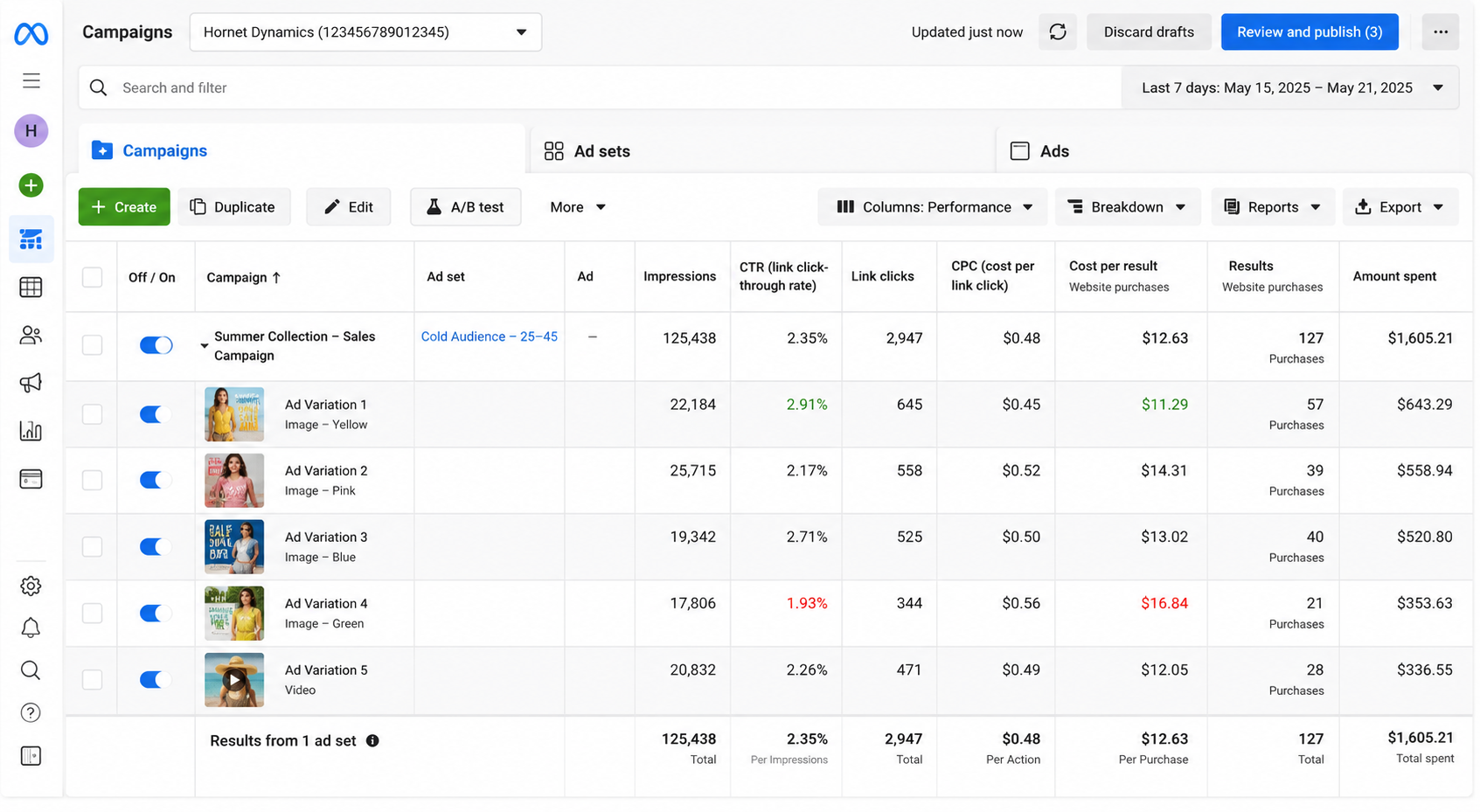
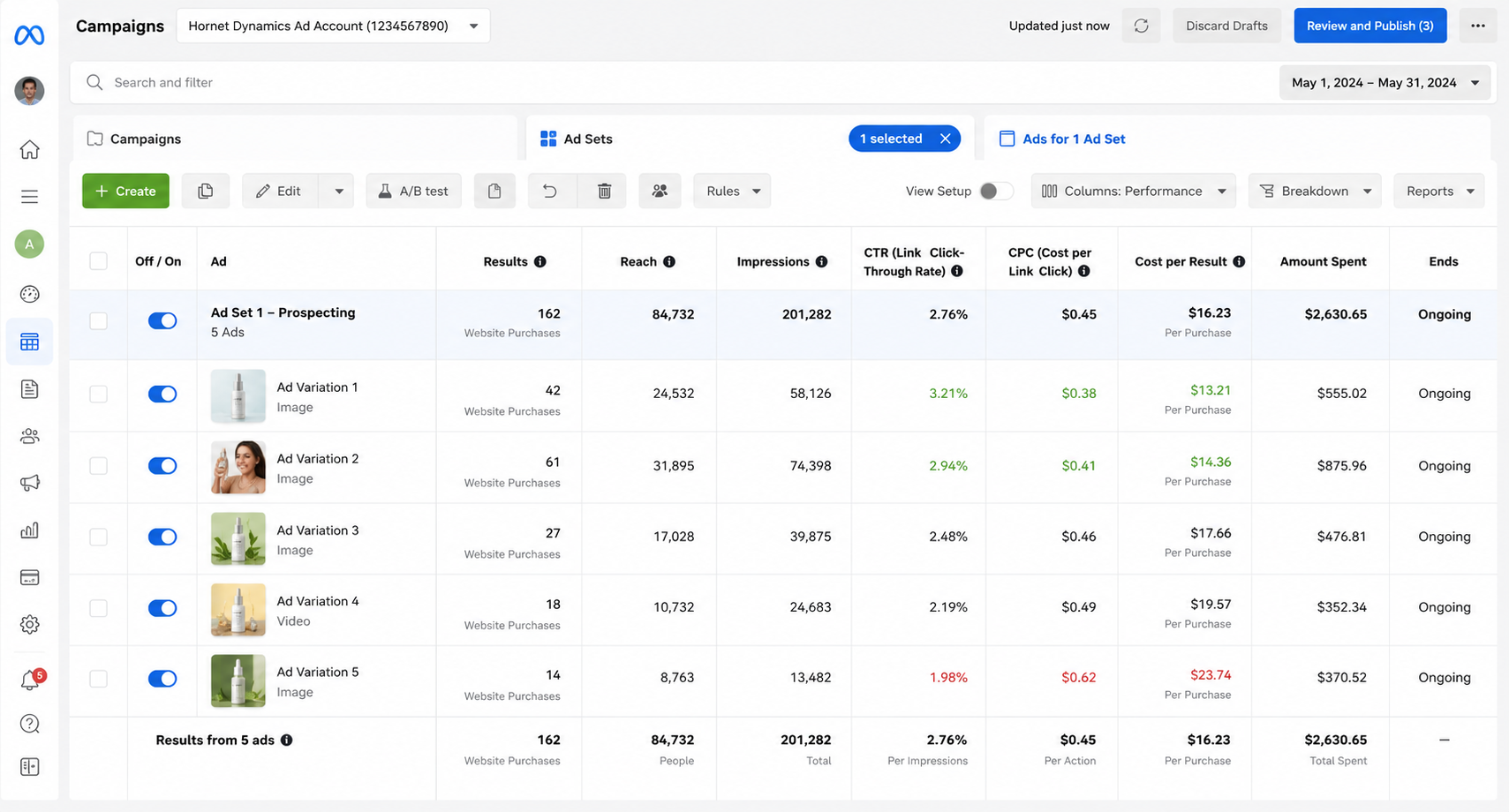
The better approach is to treat the early stage of a campaign as a testing period.
Start with several meaningful variations rather than making tiny changes that are difficult to compare. Give the ads enough opportunity to collect useful data, then identify which creatives are generating stronger results.
Weak performers can be reduced or paused while more budget is allocated to the ads showing stronger signals.
The goal is not to create dozens of ads just for the sake of variety. It is to find out what message and creative approach actually connects with the audience.
Without testing, you are not really learning what works. You are simply assuming the first version was good enough.
Reason 3: Conversion Tracking Is Broken or Missing
This can be one of the most expensive problems because it is often invisible.
The campaign runs. Meta reports results. Everything appears normal.
But if the Meta Pixel or Conversions API is not configured correctly, the data being used for optimization may not accurately represent what is happening on the website or inside the business.
Privacy changes, browser restrictions, consent requirements, and changes to website infrastructure have made conversion measurement more complicated than it used to be. Tracking that was installed years ago should not simply be assumed to still be working correctly.
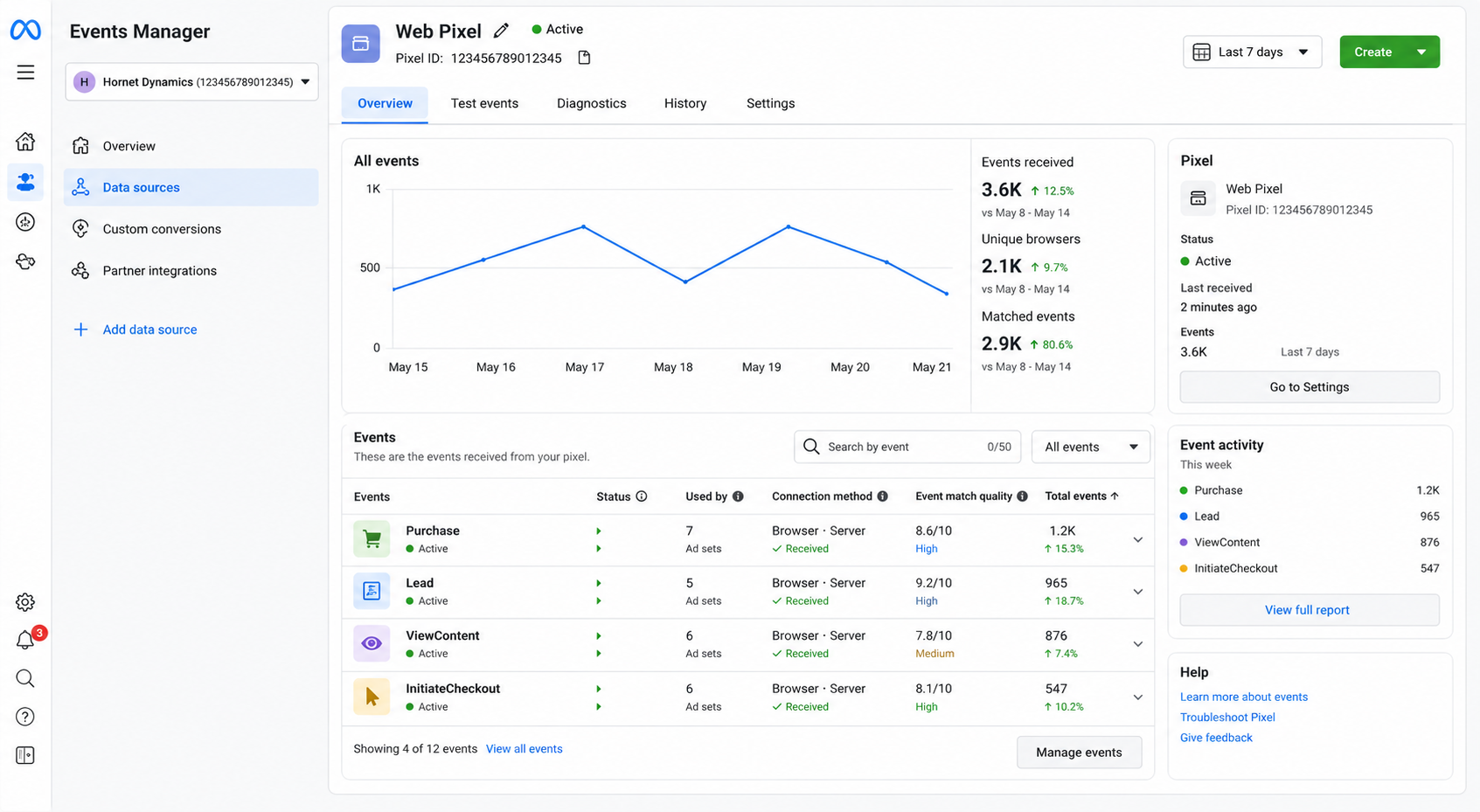
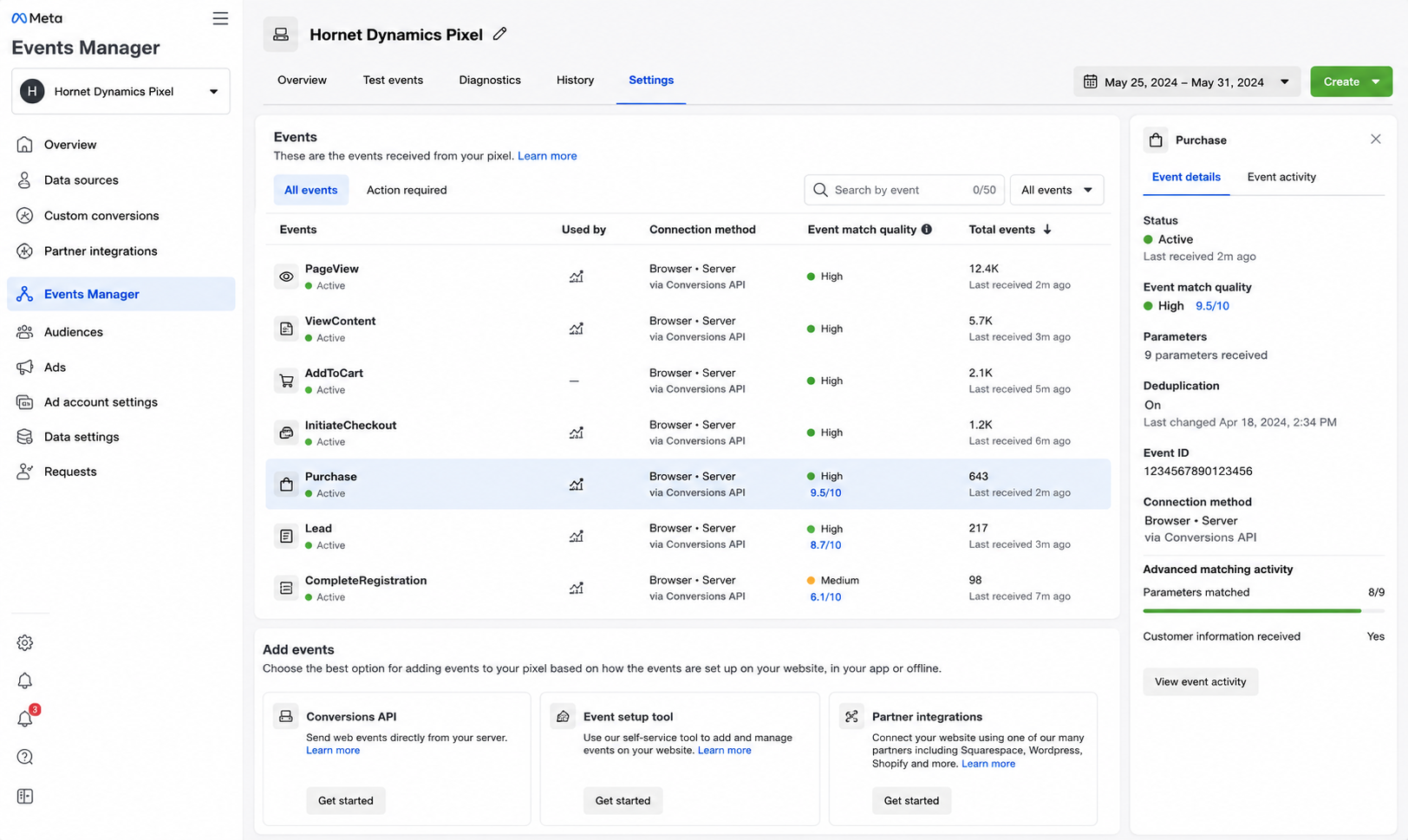
Accurate conversion data matters because Meta uses conversion signals to help determine which people are more likely to complete the desired action.
If the business cares about qualified leads but the tracking setup is primarily giving Meta weaker signals such as clicks or page views, the system has less useful information to work with.
That can create a mismatch between what the business wants and what the campaign is actually optimizing toward.
The fix starts with a tracking audit.
Check that the Pixel is installed correctly. Check whether Conversions API is being used where appropriate. Verify that important events such as leads, purchases, registrations, or other key actions are firing correctly.
Then compare the numbers from Meta Ads Manager with the CRM, website analytics, booking system, or order system.
The numbers will not always match perfectly because different platforms use different attribution and measurement methods. But major discrepancies should be investigated rather than ignored.
Tracking is not the most exciting part of advertising, but reliable data gives every other optimization decision a stronger foundation.
Reason 4: The Campaign Objective Does Not Match the Actual Goal
This mistake can look harmless at first, especially when the cost per result appears low.
Meta campaigns can be optimized around different outcomes, including traffic, engagement, leads, and sales. The objective you choose influences what the system is trying to find more of.
If the business wants sales but the campaign is designed primarily to generate engagement, getting more likes and comments does not necessarily mean the campaign is succeeding.
The same applies to traffic. A campaign can generate inexpensive clicks without generating meaningful leads or customers.
The problem is not that traffic or engagement campaigns are always bad. They simply serve different purposes.
If the actual business goal is lead generation, the campaign should be structured around generating and measuring leads. If the goal is online purchases, the campaign should be built around the appropriate sales or conversion outcome.
The fix is simple:
Do not choose an objective because its cost per result looks cheaper. Choose it because the result actually matters to the business.
A higher cost per qualified lead can be far more valuable than a low-cost click that never becomes a customer.
Putting This Together
None of these problems is especially complicated on its own.
An audience can be adjusted. Creatives can be tested. Tracking can be audited. Campaign objectives can be aligned with the actual business goal.
The bigger problem is that several of these issues can exist at the same time.
An audience that is slightly off can make creative performance harder to judge. Poor tracking can make a good ad look weak. An incorrect objective can make an account appear efficient because it is producing inexpensive actions that do not contribute much to revenue.
That is why fixing one problem in isolation does not always solve the bigger issue.
A better approach is to look at the account as a complete system:
Targeting → Creative → Tracking → Optimization → Business Result
If one part of that chain is broken, the rest becomes harder to manage effectively.
This is also why managing Meta Ads is not really a one-time setup task. Campaigns need ongoing monitoring, testing, analysis, and adjustment as new data comes in.
What a Better Meta Ads Process Looks Like
A more effective process usually starts with an account audit rather than immediately increasing the budget.
First, check whether the tracking setup is collecting the right conversion data.
Next, review the current audiences and determine whether they are based on real customer data, meaningful signals, or simply assumptions.
Then review the creative. Are there enough variations to identify which hooks and formats are working? Are weak ads being reduced while stronger ones receive more attention?
Finally, check whether the campaign objective and optimization event match the actual business outcome.
Only after these areas are understood does it make sense to think about increasing spend.
More budget can amplify a campaign that is already working. It can also amplify waste when the underlying setup is wrong.
If you are trying to figure out whether your own account has one of these problems, or you would rather have someone experienced take a proper look before increasing your spend, Hornet Dynamics' Meta Ads services focus on the areas that matter: auditing campaigns, improving targeting, testing creatives, checking conversion tracking, and managing campaigns around meaningful business outcomes rather than surface-level numbers.
The Short Version
If your Meta Ads spend is not turning into enough real results, the answer is not automatically that the platform does not work.
Start by checking four things:
-
Is the audience actually relevant to the business?
-
Are multiple creatives being tested?
-
Is conversion tracking accurate and reliable?
-
Does the campaign objective match the real business goal?
These issues can quietly reduce campaign efficiency when they are left unchecked.
Fix the foundation first. Then use the data to test, optimize, and scale.
That way, the goal is not simply to spend less on Meta Ads. It is to make every part of the advertising process work toward the result the business actually cares about.