


If you’re also planning to buy body armor, the most important comparison in front of you might be Level 3 vs Level 4 plates: Which one is perfect. Although both plates provide a very strong protection, still there’s a significant difference in their stopping power, weight, comfort, and the real-world performance which you must understand clearly. There’s a very common misconception in the minds of people that the higher level plate might definitely be the best providing better protections but in reality that’s not the case. Not every plate is the best option for every situation.
In this guide, we're going to learn about what these plates mean, the difference between Level 3 and Level 4 plates, and which one is best for you to buy.
Let’s begin with understanding the meaning of both…..
What Are Level 3 Plates?
Level 3 Plates are hard armor plates designed to provide you protections against the rifle threats while still being lightweight enough in comparison to other higher-rated armors.
According to the National Institute of Justice (NIJ) standards, these plates must be able to defeat multiple hits from 7.62x51mm M80 rounds. This is a common ammunition type used in various rifles. Level 3 plates are often made from materials like:
-
Polyethylene
-
Ceramic composite materials
-
Hybrid constructions
Advantage:
Their main advantage is a lower weight compared to higher-level plates, which allows for greater mobility during extended use. They provide a solid level of protection against many of the rifle threats one is likely to encounter.
Common Uses
-
Range training
-
Preparedness setups
-
Security applications
-
Long-duration wear
What Are Level 4 Plates?
Level 4 plates represent the highest rating for ballistic protection available for personal body armor under the NIJ 0101.06 standard. Their primary function is to defeat armor-piercing (AP) rifle rounds and are usually designed to provide a higher level of protection against the rifle shots than the level 3 plates. This capability makes them the top choice for military personnel and others operating in environments where such high-level threats are a possibility.These plates are commonly made from:
-
Monolithic ceramic
-
Ceramic composite
This construction is effective but results in a significant increase in weight and thickness compared to Level 3 plates.
Advantages:
The biggest advantage of having a Level 4 Plate is its solid protection capabilities. As these plates are made with advanced ceramic material that gives you a very good protection against the armor piercing rifle rounds.
Common Uses
-
Higher-risk environments
-
Tactical operations
-
Professional security work
-
Preparedness plans focused on maximum protection
Also Check this Guide: Diference between Level 3 and Level 4 Plates
Level 3 vs Level 4 Plates: Key Differences at a Glance
To simplify the comparison, we can look at the main attributes of each plate level side-by-side. The differences in materials directly influence their weight, thickness, and protective capabilities. This table offers a clear overview of what to expect from each type of armor plate.
|
Features |
Level 3 Plates
|
Level 4 Plates |
| Primary Protection | Standard rifle rounds (e.g., 7.62x51mm M80) | Armor-piercing rifle rounds (e.g., 30.06 M2 AP) |
| Common Materials | Steel, Polyethylene (UHMWPE), Ceramic | Ceramic, Ceramic Composite |
| Average Weight (per 10x12" plate) | 3 - 6 lbs (1.3 - 2.7 kg) | 7 - 9 lbs (3.2 - 4.1 kg) |
| Mobility & Comfort | Better mobility and reduced fatigue | Reduced mobility but increased protection |
| Average Thickness | 0.5" - 1.0" | 0.8" - 1.2" |
| Durability & Shelf Life | Depends on material; steel often highly durable | Ceramic-based designs require greater care but offer enhanced protection |
| Multi-Hit Capability | Generally very good (especially steel and PE) | Rated for one AP round, but can take other hits |
| Best For | Training, preparedness, extended wear | Maximum protection needs |
Which Plate Carrier Works Best With Level 3 and Level 4 Plates?
Most modern plate carriers are designed to be compatible with standard SAPI-cut plates, meaning they can easily hold both Level 3 and Level 4 armor without feeling too bulky or uncomfortable. The deciding factor is not only focused on the compatibility but load-bearing capability.
If we talk about the Level 3 plates then these are often comfortable if carried with a minimalist carrier that’s specifically designed for mobility and extended use. On the other hand, Level 4 plates typically add more weight to their carrier which ultimately demands a strong carrier’s suspension and support system.
However, if you ever look for running a heavier setup for Level 4 plates, consider the following features.
-
Padded shoulder straps
-
A supportive cummerbund
-
Adjustable sizing
-
Durable construction
-
Even weight distribution
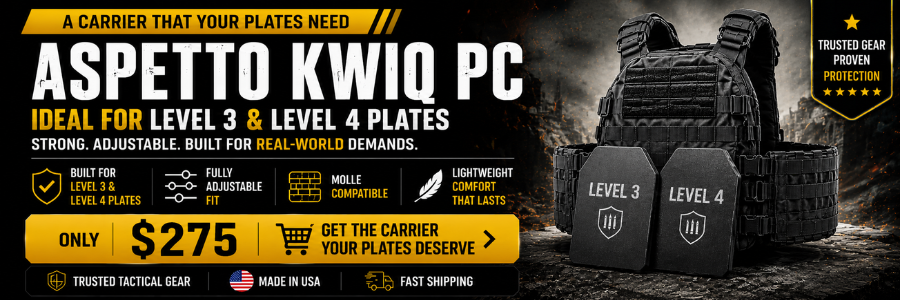
If you’re a user who wants a carrier that works perfectly for both the level 3 vs level 4 Plates then we would recommend you checking Aspetto KWIQ PC 2 —it’s worth considering! The carrier’s adjustable fit, MOLLE-compatible design, and the load bearing design makes it a perfect suitable choice for the user who may switch to both —Lightweight mobility focused setups to heavier protection focused armor configurations.
Click here & See this Plate Carrier Once
https://www.popsmokemedia.com/products/aspetto-kwiq-pc-2-plate-carrier-body-armor
Ultimately, the best plate carrier is considered the one that makes a perfect combination matching both –the weight of the plates and the intent of using it.
Common Buying Mistakes to Avoid
When purchasing body armor, there are several common mistakes people make which lead them to getting the wrong pick. You must avoid these mistakes:
-
Focusing Only on Protection Level – Higher protection isn't always better if the plate is too heavy for your needs.
-
Ignoring NIJ Certification – Always verify that the plate is officially NIJ certified and tested.
-
Choosing the Wrong Plate Size – Incorrect sizing can leave vital organs exposed or reduce comfort leading to no use of the plates.
-
Overlooking Plate Cut Design – SAPI, Shooter's, and Swimmer's cuts offer different levels of coverage and mobility.
-
Not Considering Plate Material – Steel and ceramic plates have different strengths, weaknesses, and use cases.
-
Ignoring Weight and Comfort – Heavy plates can cause fatigue and affect performance during extended wear.
-
Buying Without Assessing Your Threat Level – Choose armor based on realistic threats rather than the highest rating available.
-
Prioritizing Price Over Quality – Cheap, uncertified plates may not provide reliable ballistic protection.
Now when you’re all clear with the Level 3 vs Level 4 Plates and which carrier fits best for them, you might be eager to know the perfect plate for you. Let us now see who should choose which plate.
Who Should Choose Level 3 Plates?
Level 3 plates are an excellent choice for individuals who prioritize:
Range Training
Lighter equipment often makes training sessions more comfortable, productive, easy to carry, and provides quick mobility.
Preparedness
Many preparedness-minded users appreciate the balance of protection and mobility.
Everyday Tactical Use
For extended wear, lighter armor can improve endurance and comfort. So if you’re someone who loves tactical gear and uses plates for tactical use, then these plates are just for you.
Who Should Choose Level 4 Plates?
Level 4 plates are a perfect choice for those whose priorities include:
Higher-Threat Environments
Additional protection can be valuable in situations where greater rifle-threat protection is desired.
Maximum Rifle Protection
Many users simply prefer having the highest available protection level.
Professional Applications
Security professionals and tactical users often prioritize protection over mobility.
Frequently Asked Questions
Can Level 3 Plates Stop Rifle Rounds?
Yes, Level 3 plates are designed to provide protection against common rifle threats.
Are Level 4 Plates Worth the Extra Weight?
For users prioritizing maximum protection, many consider the added weight worthwhile.
Which Plates Are Better for Long-Term Wear?
Generally, lighter Level 3 plates are more comfortable during extended wear.
Do I Need a Different Plate Carrier for Level 4 Plates?
Not necessarily, but your carrier should properly support the weight and dimensions of the plates you choose.
Are Level 4 Plates More Expensive?
In many cases, yes. The higher protection level often results in a higher purchase price.
Conclusion
The Level 3 vs Level 4 plates debate isn't really about which plate is better—it's about which plate is better for you.
Level 3 plates offer an excellent balance of protection, weight, and mobility, while Level 4 plates prioritize maximum protection at the expense of added weight and cost and honestly speaking everyone has their own different needs and requirements for which choice of plates differ for them.
Therefore, before making a purchase, consider your intended use, comfort requirements, carrier compatibility, and realistic threat concerns. A well-balanced armor setup is usually more valuable than simply choosing the highest protection level available.